

Eight tips for the road ahead
Cutting New Car Costs
No Slip-Sliding Away: How to Stay on the Road
Keep your Cool While on the Road
Eight Tips For The Road Ahead
Be Safe, Be Smart On A Long-Distance Road Trip
Whether you’re traveling alone, with a buddy or with your spouse and a car full of kids, there are few things more “American” than the long-distance road trip. Countless vacation travelers will drive the highways looking for fun and making memories with every mile. If traveling down the “holiday road” is in your plans, take the time to prepare for your trip. You’ll have a more enjoyable vacation if you plan carefully. Here are a few driving tips, courtesy of PlatinumOne Insurance Agency:
- Maintain your car. Make sure your vehicle is up to date on its maintenance schedule, and be sure to check the battery and tires.
- Plan your trip and know where you’re going. Call ahead for proper and safe directions to get you to your destination safely and have maps of the area on hand to help you navigate once you are off the main road. You’re more likely to make good decisions, even in dangerous situations, if you’re clearheaded and know where you’re going.
- Be alert. Seems obvious, but driver inattention is surely the cause of a lot of accidents. If you stay focused behind the wheel and plan carefully, you will have a wonderful summer road trip.
- Take precaution with a cell phone. Cell phones can be a lifesaver when you need immediate access to emergency services after an accident. Keep your phone within easy reach and get to know its features. However, use it prudently. Reports suggest that driving while talking on the phone increases accident rates.
- Wear your seat belt. Whether or not it’s required by law in the state through which you’re driving, always wear your seat belt as a safety precaution.
- Protect your car against theft. Help deter criminals from taking your car with steering wheel locks, switches that disable fuel or ignition systems, and electronic tracking devices.
- If you’re in an accident. Taking immediate steps if you’ve been in an accident can protect your family and your car from further damage. Stop immediately and make sure your car is not blocking traffic. Turn off your car to keep it from overheating or catching fire. Warn oncoming cars using road flares or orange triangle reflectors. After you have protected yourself and your family, call your insurance company immediately.
- Make sure your auto insurance is up to date. Before you even leave the driveway, you want to be sure you’re protected when you’re on the road and far from home. An independent insurance agent or broker can provide the personal service and advice you need to travel in confidence.
To learn more about what an independent insurance agency offers you, visit progressiveagent.com or contact PlatinumOne Insurance Agency.
Cutting New-Car Costs
 (NAPS)—One way to avoid sticker shock or buyer’s remorse when purchasing a new car is to consider expenses you may encounter down the road.
For instance, experts say that while most people anticipate the purchase price, taxes and registration fees associated with a vehicle, many forget that the insurance they need to protect their vehicle could come with a hefty price tag. Fortunately, there are ways to keep insurance costs down while maintaining the type and amount of coverage a new car typically requires.
To help consumers control car costs—from sticker price to insurance premiums—The Progressive Group of Insurance Companies offers these tips:
- Decide ahead of time how much money you can spend and what type of vehicle best suits your needs.
- Research crash test and acci-dent data. You can see crash test video and analysis from the Insurance Institute for Highway Safety online at progressive.com.
- Check with several dealerships and get firm quotes in writing. Having quotes from several places can help you negotiate your best deal.
- Shop around for financing. Rates vary between institutions.
Insurance Costs
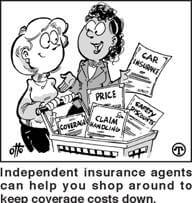
Before you buy a car, you should check into how much it would cost to insure. Try talking with an independent insurance agent—it may save you some money. Unlike “captive” agents who represent only one company, independent agents and brokers offer products from many different insurance companies. That means more choice and more opportunities for you to find the best coverage and service at the right price.
Here are a few questions to ask an independent agent or broker.
- Can I get any discounts for my car’s safety features? Your auto insurance premium is based in part on the car’s value, the cost to repair it, its overall safety record and the likelihood of theft. Many insurers offer discounts for safety features that reduce the risk of injuries or theft.
- How does this insurance company handle claims? Price isn’t the only factor to consider. It’s a good idea to deal with a company that will be there for you when you need it around the clock.
- What coverage do I need? Your specific needs may vary by the age of the car, your personal situation and other factors.
Select an agent or broker who takes the time to answer your questions and who can help you find the combination of price, service and coverages that you need.
To find an independent agent, visit progressiveagent.com.
Did You Know?
Unlike “captive” auto insurance agents who represent only one company, inde-pendent agents and brokers offer products from many different insurance companies. That means more opportunities to find the best coverage and service at the right price. To find an independent agent, visit progressiveagent.com.
No Slip-Sliding Away: How To Stay On The Road
 (NAPS)—One thing is easy to foretell: Unpredictable weather can cause reduced visibility and hazardous driving conditions that make it challenging for even the most experienced drivers. Fortunately, there are ways to protect yourself, your passengers and your car.
The following tips can help you stay safe when faced with treacherous roads:
Assemble a winter emergency kit. At a minimum, it should contain a blanket, boots, shovel, nonperishable food and a flashlight.
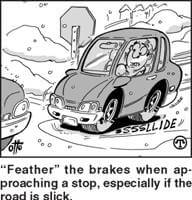
Plan ahead for stopping and turning. “Feather” the brakes when approaching a stop, especially if the road is slick. If turning, accelerate very gently through the turn.
Don’t make any sudden moves. Keep it slow and steady to maintain control.
Be cautious when braking in icy conditions. Coast over ice. Brake after reaching bare pavement. And never slam on the brakes. Brake gently in a pulsing fashion.
Steer into a skid. Remember: Locked wheels lead. If your rear tires are in a skid and “locked,” the rear of your car will start sliding to lead the car down the road. If this happens, steer into the skid, not away, and remember, don’t brake during a ski.
If you follow these tips but still find yourself in a crash, just remember that what you do after an accident can make a big difference in keeping everyone safe and in helping you and your insurance company work through a claim.
Remember to follow these tips from the experts at The Progressive Group of Insurance Companies if you get into an accident:
Stay calm. Stay at the scene but move off the roadway. Warn oncoming traffic by activating your hazard warning lights and/or setting flares.
Call the police.
Contact your insurance company to file a claim. The earlier your insurance company knows about the accident, the earlier it can get to work to resolve it.
Do not admit fault. Only discuss the accident with the police and your claims representative.
Exchange information with the other driver(s). And remember to get contact information for any witnesses.
For other tips to keep you safe on the road and keep your insurance rates down, visit progressive.com.
Did You Know
The experts at The Progressive Group of Insurance Companies say if you get into an accident, stay calm. Stay at the scene but move off the roadway. For other tips to keep you safe and keep your insurance rates down, visit progressive.com.
Keep Your Cool While On The Road
 (NAPS)—With so many people on the road during peak vacation months, it may be a good time to brush up on what you should do in the event you’re involved in a crash.
Here are some tips from The Progressive Group of Insurance Companies.
Preparedness starts before you leave the driveway:
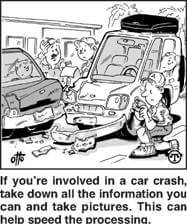
- Put a disposable camera and pen and paper in your glove box. Car insurance claims can be set-tled faster if there’s a good record of what happened. If you can take photographs or collect license plate numbers, or even names and phone numbers of witnesses, these can all help your insurance company establish facts faster.
If you’re involved in a crash:
- Move your vehicle out of the roadway, if you can. If your car is able to be driven, move it off of the road a safe distance. By getting off the road, you can help to avoid a second collision.
- Turn on your flashers or your lights. You want to be certain your vehicle is visible to other drivers.
- Check yourself and your passengers for injuries. If someone is injured, call 911 immediately.
- Call local police to report the crash.
- Call your insurance company to report the crash. The earlier your insurance company knows about the crash, the faster it can get to work to resolve your claim.
- Start documenting what happened, if you can. If you’re able to do so safely, take photographs, make notes, ask witnesses for names and phone numbers. If you’re not able to do so safely, stand as far from the roadway— and the crashed cars—as you possibly can.
- Exchange only your insurance company name. Don’t discuss the details of your coverage with anyone at the accident scene.
- Exchange vital information with the other driver(s). Names, addresses, phone numbers are all useful to your insurance company in settling the claim.
For other tips to keep you safe on the road and keep your insurance rates down or to find an independent agent, visit progressiveagent.com.