Posted under Benefits of Being Independent, Homeowner’s Insurance, Safety.

Ah, travel is bliss; or we’d like to think so! We want our vacations to be perfect, and ticket mishaps, delays, and schedule changes are all problems none of us like to have happen. We want you to have a great vacation and return home safe. Whether you are planning a trip across the state, or across the world, we have some tips to keep you safe:

  • Create an itinerary and give it to a family member or close friend.
  • Put all emergency numbers in everyone’s cell phone.
  • Don’t carry a lot of cash.
  • Advise your credit card companies of your travel. They will see purchases outside your normal area and may place a hold on the cards.
  • To avoid problems when passing through security, keep medicines in their original, labeled containers.
  • Put your name, address, and telephone numbers outside, and inside, of each piece of luggage.
  • You don’t need all your credit cards and ID; leave those you will not be using at home.
  • Never wear anything that projects affluence; no gold chains, expensive watches, rings, luggage, or other paraphernalia.  It is best to leave your expensive jewelry at home.
  • Do not wear name tags in public.
  • At the hotel discuss basic emergency procedures with your children, such as what to do in case of a fire.
  • Park only in well-lit and well-traveled areas.
  • Let your neighbors know your plans.
  • If your plans include travel out of the country, check your health insurance, as there may be some limitations.
  • Purchase timers for lights in your home and place them in two or three rooms.
  • Have a family member or friend stop in to check your home out.

Enjoy your vacation and be safe!

Posted under Auto Insurance, Commercial Insurance, Homeowner’s Insurance, News and Announcements.

The more your earning power and assets increase, the more you have at risk, and therefore, the more you need to protect. Kansas homeowners and automobile insurance provides a minimum limit of liability coverage.  An Umbrella policy from PlatinumOne Insurance Agency provides coverage above the limits of your “primary” home and auto policies.

Many people are unsure what an Umbrella policy is or what it covers. When you are outside and there is a light rain or breeze you generally don’t need or want an Umbrella. However, if it is pouring down rain with high winds, you need your umbrella. An Umbrella Insurance policy works much the same way. Umbrella Insurance provides extra protection or limits above the liability insurance you currently have. Just as an Umbrella protects you from heavy rain, an Umbrella Insurance policy protects you from losing the entirety of your wealth and assets in the event of a claim. A clear advantage of an Umbrella policy for Kansas residents is the coverage’s ability to “drop down” and fill in the gaps in underlying policies.

Here is an example; John Doe falls asleep while driving and hits a van with a family inside. The accident results in $600,000 of medical bills. John Doe had a policy with only a $500,000 limit, so now John Doe will have to come up with an additional $100,000 to satisfy the claim. If there had been an Umbrella policy in place, that policy would have paid the additional $100,000, not John Doe.

Certain lifestyle pursuits such as volunteering for nonprofits can increase your risk of being sued, necessitating the need for higher personal liability limits. Also if you own a boat, RV, motorcycle, or have a pool, you may way to consider higher limits. If you have a high net worth it is advisable to protect your assets with a personal Umbrella policy. The cost for a $1,000,000 or $5,000,000 is reasonable and well worth it.

Kansas Umbrella insurance policies provide broad coverage beyond traditional home and auto. They provide additional liability coverage above the limits of your Kansas homeowner’s, Kansas auto, and Kansas RV, or boat insurance policies.

Posted under Homeowner’s Insurance, Personal Insurance, Safety.

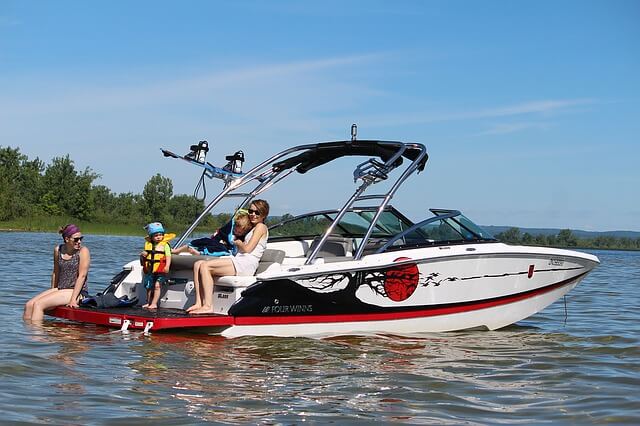
Warm weather sends many of us to the water to enjoy our watercraft, which brings us to the important topic of boating/watercraft safety.  According to the U.S. Coast Guard, 88 percent of reported fatalities in 2012 happened on boats where the driver had not received boating safety training. Here are some things to think about before you take your watercraft out:

Trip Pre Planning

  • Have a first aid kit and fire extinguisher on board.
  • Make sure your gas tanks are vented and bilges are free of vapors, oil, waste, and grease.
  • Carry Coast Guard approved life jackets.
  • Check your motor at least once per year.
  • View the hull for damage.
  • Consider taking a safety course.
  • We know you have a million things to do, but learning CPR should be on the top of the list. It will give you tremendous peace of mind.

 Watercraft Safety

  • Follow all safety rules.
  • Be aware of weather conditions.
  • Have operable boat lights – Always test boat lights before the boat leaves the dock and carry extra batteries.
  • Never allow passengers to ride on gunwales, seatbacks or outside of protective railings, including the front of a pontoon boat.  A sudden turn, stop or start could cause a fall overboard.
  • Follow speed laws around house boats and docks.
  • Know your boat’s capacity and how to properly load it. An overloaded or improperly loaded boat can cause safety problems.
  • Have a working marine radio on board at all times and know how to use it.
  • Ventilate after fueling. Open hatches, run the blower, and check for fuel fumes before starting the engine.
  • Infants and young children are at a higher risk for hypothermia, so if you are taking a baby on a boat, just take a few extra precautions to keep your baby warm.

PlatinumOne Insurance can provide you with competitive rates on all your watercraft needs, call us today.

Posted under Homeowner’s Insurance, Safety, Uncategorized.

Fire up the grill, bring on the steak; it’s time to barbecue. This is something most of us do weekly. We want your barbecue experience to be fun and safe for the entire family. You might think you know all you need to know about barbecue safety and grilling, but why don’t you review this page, just to make sure.


On average, annually there are over 9,000 home fires directly related to barbecuing. According to the National Fire Prevention Association, in 2011 barbecuing was the cause of $80 million dollars in property damage and 16,000 people visiting the emergency room.

Follow these home safety tips from PlatinumOne Insurance Agency to help your barbecue experience go off without injury or damage:

General Safety


  • Never barbecue inside, in a garage, on the roof, or on a second story deck
  • Never leave your grill unattended
  • If you are using a charcoal grill, let the lighter fluid soak into the coals a few minutes before lighting them so that any vapors have time to evaporate. When you do light the coals, stand back
  • Open the grill lid before you light it
  • Don’t wear loose fitting clothing
  • Keep a fire extinguisher outside or close by
  • Make sure you use the grill 10 feet away from your house
  • Have a water source close to the barbecue
  • Don’t let raw meat sit out too long without being chilled or cooked
  • Always wash your hands before and after handling food
  • Don’t over indulge in alcohol while barbecuing
  • Let the grill cool down before you store or cover it

Gas Grills

  • Before having an LP cylinder filled, check it for dents, gouges, or other signs of disrepair
  • If you have a gas grill, make sure the connections from the propane tank to the grill are tight
  • Use porcelain rocks instead of lava rocks. Lava rocks are porous and can hold grease which can catch fire. They also make an uneven heating surface
  • When you turn off a gas grill, remember to turn off the propane tank too

Always make sure that the barbecue is in a safe place, where children and pets won’t touch or bump into it.  Remember that the barbecue will still be hot even after you finish cooking; anyone contacting a hot barbecue could be burned. Make sure your home owner’s policy is up to date.

Posted under Auto Insurance, Homeowner’s Insurance.

9535581_xl

If you own a Recreational vehicle, motorcycle or other toys, insurance coverage should be part of your thinking. Remember, they are not automatically covered under your current insurance program. Many State laws requires you to maintain liability coverage on your vehicle. Here is a schedule of insurance coverage you might consider:

Liability Insurance

Liability coverage, also known as “property damage/bodily injury”, can help cover expenses from damaging a vehicle or injuring a person in an accident. 

Collision coverage

Collision coverage helps pay for damage to your vehicle if you hit another vehicle, another vehicle hits you, or your vehicle rolls over. Collision coverage can be required if your vehicle is financed or leased.

Comprehensive coverage

Comprehensive insurance helps pay for damage to your vehicle not caused by collision. Examples include damage or loss due to theft, vandalism, falling objects, fire, storms, and flood.

Uninsured or underinsured coverage

This coverage helps pay for repairs if your RV is damaged in an accident by an underinsured, uninsured, or unidentified driver. It also helps pay medical costs.

Medical payments coverage

Medical payments coverage helps pay medical costs for you and your passengers in the event of an accident, regardless of who is at fault.

Rental reimbursement coverage

This coverage helps pay for your rental car or other transportation if the RV cannot be driven due to an at-fault accident or comprehensive claim. This is really important especially if you are out of town.

Towing and labor coverage

Towing and labor coverage reimburses you for towing charges if an insured vehicle is disabled. It also covers on-site assistance, such as battery jump-start, tire change, and locksmith services. We recommend this on all recreation vehicles. Contact PlatinumOne Insurance today for more information. PlatinumOne Insurance offers competitive pricing for all your RV, Boat, and Motorcycle needs.

Posted under Auto Insurance, Homeowner’s Insurance, News and Announcements.

If you own a boat, RV, or other recreational vehicles you should consider adding them to you insurance portfolio. They are not automatically covered, without notifying the insurance company. Here are a few reasons to consider adding your recreational vehicles to your policy:

1.  If the Boat or RV is not added to the policy you will not have coverage for bodily injury or damage to the RV itself.

2. If your RV breaks down on a trip and you need road side assistance or towing, the costs will be out of pocket if you don’t have the right insurance.

3. If you are in an accident you want a claims adjuster who understands RV’s and the unique issues around repairs and replacement. Having your boat or RV insured with an experienced insurer can help resolve claim issues quickly.

4. If your personal property is stolen out of your boat or RV, it won’t be covered without the right coverage.

An RV is your home when you’re away from home. Therefore, when choosing an RV insurance policy, you’ll want to consider coverage that protects you and your guests while traveling, as well as coverage that protects your vehicle when it is parked or stored. Your RV or boat should be enjoyed by family and friends without having to worry about suffering the financial consequences of an uninsured loss. Let PlatinumOne Insurance Agency take the worry away by providing insurance coverage for your boat and RV.

Posted under Commercial Insurance, Homeowner’s Insurance, News and Announcements, Safety.

According to most experts identity theft is on the increase. Your identity is one of your most important assists. Violation of your identity is frightening and can be costly, but most consumers tell themselves it cannot happen to them.

Ben Weitzenkorn, a contributor to TechNewsDaily, reports, “Identity theft in the United States rose to a three-year high in 2012, with more than 5 percent of the adult population, or 12.6 million people, falling victim to such crimes, says a new survey. That’s up from 4.9 percent in 2011 and 4.35 percent in 2010.”  Here is another interesting fact. Over 24% of identity thefts occur from people you know.

Here are a few recent headlines that should catch your attention:

Miami Man Charged in $12 Million Identity Theft Tax Refund Fraud Scheme Involving Thousands of Fraudulently Obtained U.S. checks http://www.fbi.gov

2 men accused of identity theft ring on trial http://www.khon2.com

Seven charged with identity theft inside Davis County Jail  http://www.standard.net

Police arrest man for forgery, identity theft for cashing stolen checks http://www.whptv.com

Consider adding Identity Theft Insurance from PlatinumOne Insurance to your insurance policy.There are many things you can do to protect yourself from identity theft. Here are a few:

  1. Create a PIN that is not too easy to crack, i.e. don’t use “(yourname)123”
  2. Don’t give out your Social Security number to people you don’t know.
  3. Consider reducing the credit cards in your wallet. Only travel with what you need.
  4. Shred all financial statements before placing in trash.
  5. Check your credit report annually.
  6. Don’t put your birthday on your social media site.
  7. Be careful about opening links you find in emails, know the source.

Remember that just being aware of, and doing, these things can reduce the possibility of identity theft. Call PlatinumOne Insurance today for more information regarding Identity Theft.

Posted under Auto Insurance, News and Announcements, Safety.

If you own a Recreational vehicle or boat, insurance coverage should be part of your thinking. Remember, recreation vehicles are not automatically covered under your current insurance program. PlatinumOne Insurance can offer competitive premiums on RV’s and boats, so make sure you call us today.

Many state laws require you to maintain liability coverage on your vehicle or boat.  Many RV owners leave their RV’s parked out in the open yard, leaving them susceptible to storm damage and possible theft. If your RV holds a great deal of value, make sure to purchase full coverage RV insurance to protect against a potential loss. Here is a schedule of insurance coverage you might consider:

Liability Insurance

Liability coverage, also known as “property damage/bodily injury”, can help cover expenses from damaging a vehicle or injuring a person in an accident. 

Collision coverage

Collision coverage helps pay for damage to your vehicle if you hit another vehicle, another vehicle hits you, or your vehicle rolls over. Collision coverage can be required if your vehicle is financed or leased.

Comprehensive coverage

Comprehensive insurance helps pay for damage to your vehicle not caused by collision. Examples include damage or loss due to theft, vandalism, falling objects, fire, storms, and flood.

Uninsured or underinsured coverage

This coverage helps pay for repairs if your RV is damaged in an accident by an underinsured, uninsured, or unidentified driver. It also helps pay medical costs.

Medical payments coverage

Medical payments coverage helps pay medical costs for you and your passengers in the event of an accident, regardless of who is at fault.

Rental reimbursement coverage

This coverage helps pay for your rental car or other transportation if your RV cannot be driven due to an at-fault accident or comprehensive claim. This is really important especially if you are out of town.

Towing and labor coverage

Towing and labor coverage reimburses you for towing charges if an insured vehicle is disabled. It also covers on-site assistance, such as battery jump-start, tire change, and locksmith services. We recommend this on all recreation vehicles.

Posted under Commercial Insurance, News and Announcements, Safety.

If you have employees, you are exposed to employment liability claims. Employees know their rights and it is time for all employers to be more informed about how to protect their company. Legislation such as the Family Medical Leave Act and the Americans With Disabilities Act, plus a growing number of job-related lawsuits and claims, have created the need for business owners to consider a type of insurance known as employment practices liability insurance, or EPLI. An Employment Practice Liability Insurance policy offers insurance protection against claims and lawsuits that are brought against a business, its officers or directors, or its employees and managers.

Claims can be broken down into the following categories:

  • Harassment
  • Wrongful Termination
  • Breach of employment contract
  • Discrimination
  • Invasion of Privacy
  • Compensation Issues
  • Employee Benefits Administration

In today’s world employers can no longer assume all employment relationships will go smoothly. Finding a suitable Employment Practices Liability Insurance program has become one of the single most important things owners and managers can do.

Ten Reasons To Have EPLI Coverage

  1. General liability policies don’t cover this exposure
  2. Wage and hour claims have tripled since 1997
  3. Over 60% of claims come from former employees
  4. 40% of claims involve firms with 50 employees or less
  5. The average cost to defend an EPLI claim is $150,000
  6. 47% of verdicts are between $100,000 and $500,000
  7. EEOC recorded over 93,000 complaints in 2011
  8. Claims can come from vendors and even clients
  9. The financial ramifications can cripple your firm
  10. Coverage is very affordable and easy to obtain

Contact PlatinumOne Insurance Agency for a free review of your insurance program. We have access to many competitive programs and will be happy to provide you with a quote.

Posted under Homeowner’s Insurance, News and Announcements, Safety.

If you have a fire or burglary in your home you would expect the insurance company to repair and or replace your lost and damaged items. Would you be able to remember every item you have accumulated over the years if they were all gone? If your home is damaged, or totally lost due to a fire or other event, having a home inventory will help you recover all your personal property with the least amount of time and stress. Having a home inventory is the easiest and best way to manage insurance claims after a disaster or loss. This also expedites the claim process, making it easier to be paid.

Creating a personal home inventory helps in calculating how much your personal property is worth. Knowing this ensures you have an accurate value. If you have too little coverage, you would not have enough funds to replace lost property; and if you have too much coverage, you are paying higher premiums than you need to. Here are a few more reasons to develop a home inventory:

  • It helps settle claims accurately and promptly
  • It provides required documentation of ownership and value
  • It helps with estate documentation
  • It preserves your heritage

Documenting important valuables such as rings, watches, jewelry, guns, and cameras should be part of your plan. In most cases some high end valuables are subject to limitations unless they are scheduled. Scheduling these items insured you will have the correct value in the event of a loss.

Additional Tips:

The best way to start your home inventory list is to go room by room. Take on three rooms per day, and you will be done in no time. Send a copy of your personal home inventory to our office; we would be happy to keep the written records as back-up for you.